“Water and air, the two essential fluids on which all life depends, have become global garbage cans”
Jacques Yves Cousteau
The Problem
Clean water has become a rare commodity. Millions of people worldwide have little to no access to clean water, many times having to walk for miles just to fill up or purchase jugs of clean drinkable water. The United nations realized in 2010 that clean water should be a right to all people. Clean water contributes greatly to an impoverished community. Making clean water accessible to the community greatly reduces diseases and can contribute to a healthier and cleaner community resulting in a greater average life span.
Children and adults are less likely to contract contaminated water related diseases such as diarrhea (which kills an estimated 829 000 people annually), hepatitis A, schistosomiasis and gangue fever, to name a few. With the recent realization that clean water is a right to all people, companies and individuals have now realized the importance of keeping lakes and freshwater clean, limiting the amount of harmful chemicals and waste that we put into these bodies of water as many times it can cause more harm then good.
Pollution
Pollution is a major issue in today’s society, many people have no regard for where their waste goes, thinking it is easier to just put it in the trash can or throw it on the ground if they are in a rush. This lazy mentality has led to widespread pollution which has a major impact on the minimal amount of clean water we have left on earth.
Water pollution has become and still is an existing pollution problem. The world is 72 percent covered by water bodies, but 97 percent of this total is ocean water which is undrinkable. Since water is known as a universal solvent and is one of the easiest natural resources to pollute due to its ability to dissolve a surplus amount of substances when compared to any other resource on earth. The remaining 3 percent of clean water is highly susceptible to pollution.
Leading causes of pollution
Non-point source is the leading cause to water pollution worldwide, almost everything humans do on the daily can be considered a non-point source. Non-point sources are classified by the fact that there is no real way to find the origin cause of the pollution some examples of non-point sources are:
- Excess fertilizer used by farmers or individuals that leaks into the ground water
- Oil, grease, salt and urban runoff from cities when it rains all the chemicals funnel into our wastewater systems
- Bacteria and nutrients from animals and people that come from toxic waste
- Garbage from the ground or landfills that find their way into lakes and rivers
The other leading cause to pollution in waters is point source pollution. Point source pollution comes from a specific source; a factory for instance. In most factory applications, water is used to cool or clean parts, the leftover wastewater is then dumped back into the body of water. Though this process has now been regulated by the government it still causes harm to the body of water adding access nutrients and harming ecosystems that once thrived in that environment.
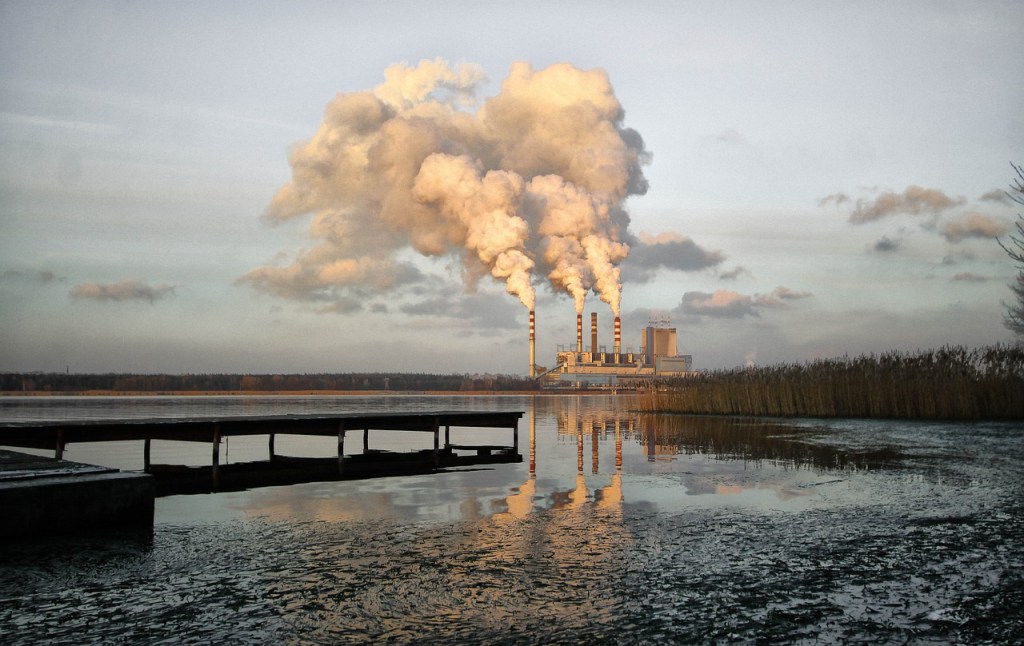
All in all, non-point and point source pollution are the leading causes of the water pollution problem. Though it is hard to pinpoint the exact location where non-point pollution comes from, we can all do our part in putting the environment first. We will ultimately reduce our ecological footprint and the world will be a much more sustainable place to live in.
Solutions to the Water Crisis
Although clean water has been taken for granted by much of the developed society, there is still in a minority of people on earth who do not have access to clean water. In fact, 1 in 9 people world wide do not have access to clean and safe drinking water. With the advancements in technology that we’ve observed over the past couple decades, it seems a bit unfair and unethical to have such a high percentage of people not having access to water, the substance that all living organism require to survive. There are various methods of making un-drinkable water drinkable, which we will explore here.
Desalination
As previously stated, 97% of the earth’s water is ocean water. The only way to make ocean water drinkable is through a process called desalination. For many coastal communities in developing countries, this seems like the best option.
Desalination appears to be a simple solution to the current shortage of potable water that is affecting less fortunate people in both developing and first world countries but unfortunately, it is not the case.
Desalination by Distillation
There are a dozen methods to desalinate water, from solar distillation, to reverse osmosis. These methods are very expensive and require a lot of energy. The oldest and simplest method used to desalinate water is distillation, which comes in many forms.
Solar Distillation: solar distillation is a process that is meant to resemble the natural cycle of water in nature. The sun heats the saltwater enough for water to evaporate and for the salt to be left behind, while the desalinated water condensation is collected. When the direct heat of the sun is used, it is referred to as Thermal solar desalination, but the sun can also be used to power solar panels, from which enough energy is drawn to complete the process.
Multi-stage flash distillation: Multi-stage flash distillation is a method where an immense amount of energy is used to create an almost instant ebullition of sea water in multiple stages, and the freshwater condensation is collected at each stage, then the brine left behind is recirculated into the system.
Vacuum distillation: Vacuum distillation is similar to other distillation methods, where seawater is boiled and condensation is collected, but it is done in an environment where atmospheric pressure is lower, which means that the water can boil at a much lower temperature, reducing the energy needed for the process.
Multiple effect distillation: In multiple effect distillation, or MED for short, water is evaporated into steam inside of pipes, onto which a layer of saltwater is present, and the energy from the steam is used to evaporate said saltwater. This technology is rarely used and has been replaced with newer technologies.
The benefits of distillation processes are that they often do not require treatment of the water before the process begins, have minimal environmental impact and they can be combined with power plants, to use the residual heat and energy from generating electricity to heat the water.
The biggest drawback, other than cost, of distillation is the brine water, which can be difficult to dispose of. Brine is the concentrate of saltwater left behind after the desalination process. This concentrate can be harmful for the environment as it has a much higher percentage of salt. There are multiple disposal methods that we currently use, but recently, the treatment of said brine water has shown to be more promising and safer than its disposal.
Reverse Osmosis Desalination
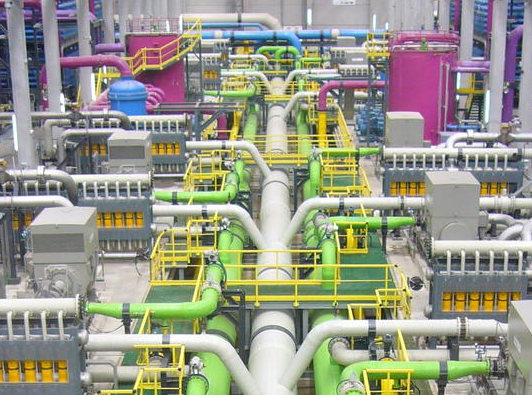
The current leading method for desalination, and the fast growing, is desalination by reverse osmosis. In reverse Osmosis, water is forced to pass through semipermeable composite membranes, only the water passes through the membrane, leaving salts behind. Reverse osmosis usually uses less energy than the multiple thermal desalination by distillation methods. The cost of desalination by reverse osmosis is expected reduce as technology improves.
To prevent the membranes from getting destroyed by various bacteria, scaling, and suspended matter in the water, treatment of the water before the desalination is required, it is often done by the introduction of acids, chlorine and other chemical substances. The cleaning of the membranes is also required in emergencies, which adds to the maintenance costs and requires the whole system to be off. The chemically altered fresh water from the flushing process is dumped directly into the ocean, permanently damaging the environment.
Reverse osmosis generally does not require the direct use of fossil fuels, batteries or electricity as it is fed by gravity, although electricity is still required for the monitoring systems, electricity in the plant and for general use.
Clean Water Technologies
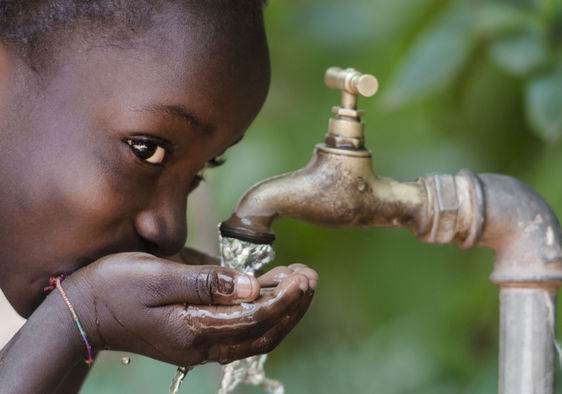
Communities in developing countries that are far away from the ocean have no other option than to find the closest water source that is relatively clean. This can sometimes meaning trekking for miles in the blistering heat to fetch a few litres of water and carry it back. Many communities aren’t even able to find clean water, especially during dry seasons. Having to settle for unsanitary water that often leads to disease. In developing countries, as much as 80% of illness is linked to unsafe water and sanitary conditions.
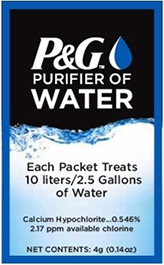
P&G has created a product that can clean dirty river water to a suitable drinking level, all in a cheap-to-produce packet. This packet, “engineered to be a mini water treatment plant”, has provided 15 billion litres of clean drinking water to developing countries, according to their website. The packet of powder-like-substance works in a 3-step process that latches onto particles, groups them into clumps that falls to the bottom of the container, then a disinfectant is activated which kills remaining bacteria. This packet only costs cents to produce and is exactly the revolutionary technologies that we, as developed countries, should seek to produce.
Other water purification technology include the Life Straw, created by Vestergaard, de-humidification methods, fog condensation, etc. There are many technologies that exist today, not all of these technologies are cheap. Technologies in water purification should be researched and developed until every human on earth receives clean drinking water with little to no effort and at very low cost. As stated by the UN, it is a human right.
How can you as an individual help?
With 195 countries around the world and a population of 7.7 billion people, there are an estimated 2.6 billion people who lack improved sanitation services. The numbers of deaths annually have reached an outstanding number 3.6 million, mostly among children.
There are many organizations that accept donations to provide services such as: delivering water by truck until permanent, cleaning sources of water that have been contaminated, installing water reservoirs, making wells that require buckets to carry water and boreholes that work by pump, as well as improving or installing water sanitation systems. donate.wordvision.ca is an organization that takes donations not only for clean water projects but many other things such as, sponsoring a child, providing meals to people in need, medicines to clinic that are also in need, and many other things that suffering families and areas are not able to access. In the case of 1.5 billion people lacking clean water, every donation helps and goes to a good cause, whether it is directly for a family or not.
Beyond financially aiding a specific cause, each individual can do their part by reducing waste and attempting to recycle as much as possible. Reducing your impact on the earth can have a great long-term benefit, especially in our dwindling reservoirs of fresh, drinkable water. Even volunteering to clean up the beaches or in the park, cleaning our planet will never be a bad thing. If everyone does their part and the movement is supported, water being a human right can become a word-wide reality.
Works Cited
World Vision Canada.” World Vision Canada, https://www.worldvision.ca/?_ga=2.251059396.395690346.1574032908-396874450.1573662601&_gac=1.22249801.1573667225.CjwKCAiA8K7uBRBBEiwACOm4dxuWzFdWhlGBzdUWIRKL1SZyElOTZIQBjVkk73ukaokWPKVBuCMG-xoCvYMQAvD_BwE.
The Future of Seawater Desalination: Energy, Technology, and the Environment, Menachem Elimelech. https://web.archive.org/web/20120324210357/http://physics.indiana.edu/~brabson/p310/WaterDesalEgy.pdf
Desalination brine disposal methods and treatment technologies, Panagopoulos A, Haralambous KJ, Loizidou M, https://www.ncbi.nlm.nih.gov/pubmed/31374511
Desalination by distillation, Organization of american states, http://www.oas.org/usde/publications/unit/oea59e/ch21.htm
Desalination by reverse osmosis, Organization of american states, https://www.oas.org/dsd/publications/Unit/oea59e/ch20.htm
“Basic Information about Nonpoint Source (NPS) Pollution.” EPA, Environmental Protection Agency, 10
Aug. 2018, https://www.epa.gov/nps/basic-information-about-nonpoint-source-nps-pollution.
“Drinking-Water.” World Health Organization, World Health Organization, 14 June 2019,
https://www.who.int/news-room/fact-sheets/detail/drinking-water.
National Geographic Society. “Point Source and Nonpoint Sources of Pollution.” National Geographic
Society, 15 July 2019, https://www.nationalgeographic.org/encyclopedia/point-source-and-
nonpoint-sources-pollution/.
“Factory Emitting Smog from Smoke Stacks .” Living-Water, 26 Sept. 2018, http://www.living-
water.co.uk/blog/the-effects-of-industrial-water-pollution/.
“Life Without Clean Water .” YouTube, YouTube, 9 Jan. 2013,
www.youtube.com/watch?v=9i_YsJ2AgTY.
Kaul, Rhythma. “Garbage Filling Body of Water .” Hindustan Times, 17 Nov. 2019,
https://www.hindustantimes.com/india-news/tackling-pollution-to-provide-clean-
drinking-water-for-all/story-b4jCcGUMMPhJLgPQXaw4KJ.html.
“Facts and Statistics about Water and Its Effects.” The Water Project, https://thewaterproject.org/water-scarcity/water_stats.
“P&G Children’s Safe Drinking Water Program (CSDW).” P&G Children’s Safe Drinking Water Program (CSDW), https://csdw.org/.
“Our History.” LifeStraw Water Filters & Purifiers, https://www.lifestraw.com/pages/our-history.
 Clean Water for All